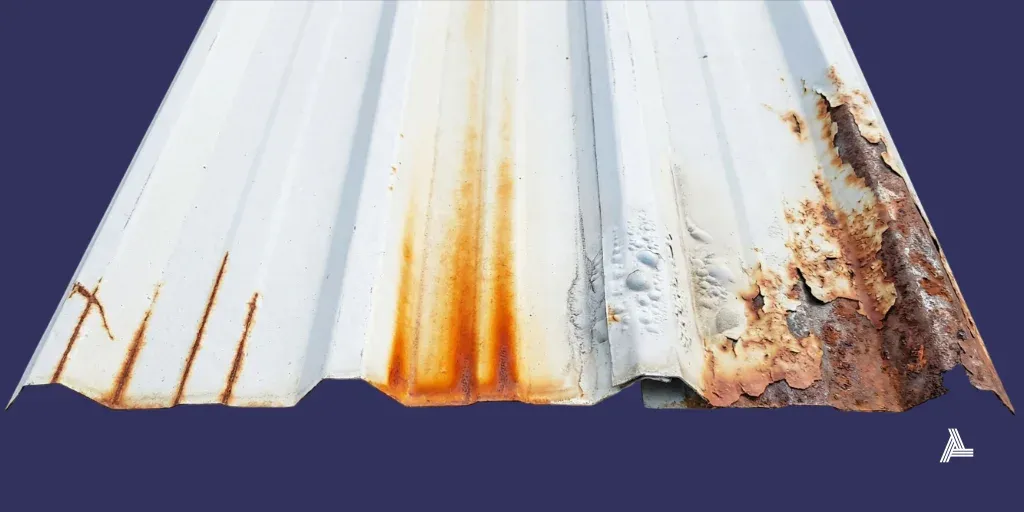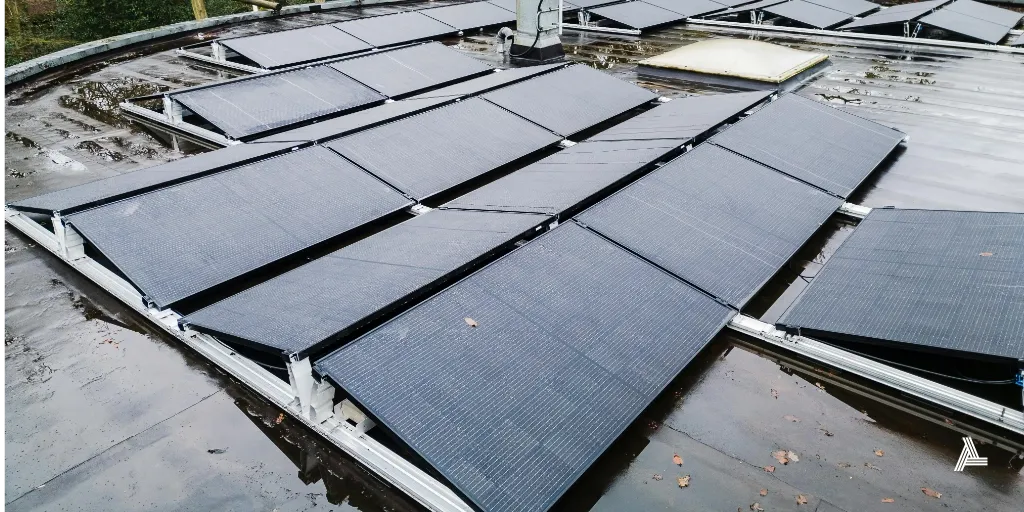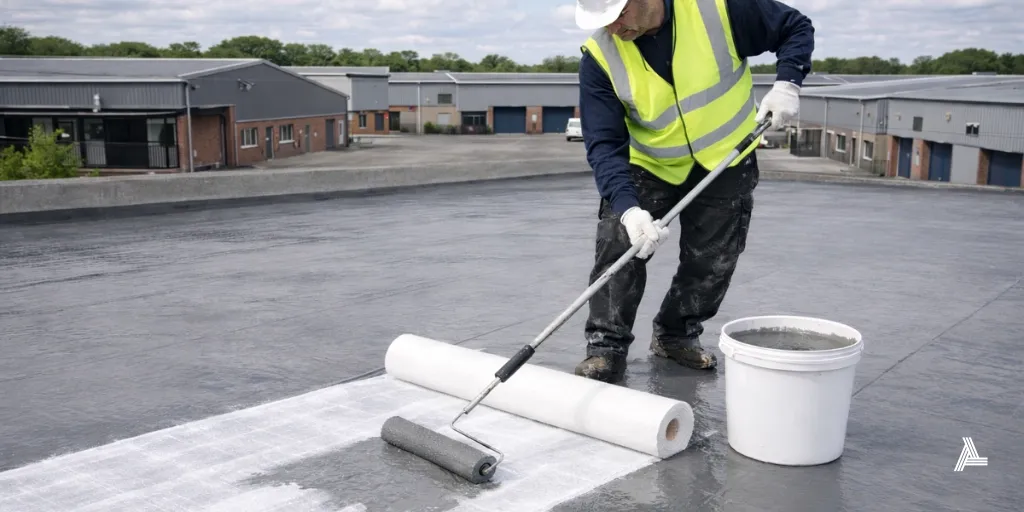
Polyester-based fibreglass roofing systems traditionally known as GRP or Fibreglass Roofing are a popular choice for both residential and commercial roofing in the UK, known for their strength, durability and versatility. These systems are composed of fibreglass matting saturated with polyester resin and topcoat, which, when cured, form a seamless, waterproof layer across the roof’s surface. The waterproofing layer is built up from a catalysed polyester resin, typically an isophthalic polyester resin for its better water resistance, worked into the glass mat until the fibres are fully wetted out. The strength of the system lies in the combination of fibreglass and resin, providing a robust, lightweight, and highly adaptable roofing solution.
Advantanges
One of the main advantages of polyester-based fibreglass roofing is its strength, when cured the system forms a durable and rigid structure that can withstand a wide range of weather conditions and impacts. This high level of strength makes it suitable for installations where durability is essential, allowing it to handle daily wear and tear, as well as more extreme weather events, without deteriorating quickly.
When installed correctly, this type of roof can last over 25 years with minimal maintenance. The seamless application process, involving a resin that binds the fibreglass matting, creates a continuous surface that is less prone to leaks and cracks. This property is especially valuable in the UK’s damp climate, where heavy rains and moisture can quickly degrade traditional roofing materials.
This system is highly customisable and is available in a variety of colours and finishes, they can complement the aesthetic of almost any building, from modern designs to more traditional structures. Additionally, fibreglass roofs are compatible with a wide range of roof shapes, including complex structures with multiple angles and slopes, making them suitable for architectural designs that might pose challenges for other materials. Their adaptability and lightweight nature make them ideal for installations where adding significant weight to the structure is not possible.
Disadvantages
While fibreglass roofing systems have notable benefits, they are not without their drawbacks, particularly when it comes to flexibility. The system is known for its strength, but has a low flexibility rating, which can become a concern on roofs larger than 50 square metres. In these cases, expansion joints are essential to allow for natural movement and to reduce the risk of stress fractures, as the rigidity of the material can otherwise lead to cracking, especially under changing weather conditions.
Another drawback is that polyester-based fibreglass systems contain a high concentration of volatile organic compounds (VOCs), including styrene. These VOCs are released during installation making the GRP Roofing process very smelly and can linger weeks after a roof has been completed. Styrene, in particular, is associated with both environmental concerns and health risks and while it does dissipate after installation, some property owners may be concerned about the immediate impact during the curing phase.
Additionally, traditional polyester-based fibreglass systems can only be applied to OSB (Oriented Strand Board) decking. This limitation means they cannot be overlaid onto existing roof surfaces such as concrete, bitumen, or other traditional roofing materials. For buildings that require a roof replacement, this often necessitates the removal of the existing roof surface and the installation of new OSB decking, adding time and costs to the project.
In recent years, newer polyester-based fibreglass roofing systems have entered the market, offering application options for a wider variety of surfaces. However, these newer systems still suffer from flexibility issues, and if problems arise, such as leaks or wear, the entire roof system often needs to be reapplied. This reapplication requirement can lead to significantly higher maintenance costs compared to traditional systems, which may allow for targeted repairs rather than full reinstallation.
General Application Guide
Decking
Ensure the roof deck is constructed from suitable materials, such as 18mm thick OSB3 (Oriented Strand Board) with tongue and groove edges, providing a stable and dry substrate.
Trims
Fix support battens around the roof’s perimeter to create a gap for the gutter to fit behind the GRP Roofing trims. A 25mm x 40mm batten is recommended, fixed to the top of the fascia boards flush with the top edge of the roof boards.
Secure the roof trims to the deck using appropriate fixings. Flat flashing and wall fillets should be bonded using a suitable adhesive like Sharkseal. Non-structural adhesives such as silicone or mastic must not be used, as the bond strength will not be sufficient to prevent leaks.
Application of the Base Coat and Fibreglass Reinforcement
Prepare the polyester resin by mixing it with the catalyst according to the manufacturer’s instructions. Ensure thorough mixing to achieve proper curing. Using a brush or roller, apply the resin onto the roof surface at a rate of approximately 1 kg per square metre.
Cut the 450/600 gm² glass mat to the correct size to cover the affected area. Heavier reinforcements such as a 900g chopped strand matting are used where a thicker, more robust laminate is called for, for example on trafficked or industrial roofs. Place the matting over the resin-coated area and wet it out with additional resin at a rate of 0.5 kg per square metre. Stipple well with the brush or use a paddle wheel roller for larger areas to ensure the laminate is air-free and completely consolidated.
Top Coat Application
Allow the laminate to cure until it is firm to the touch. Curing times can vary based on ambient temperature and resin formulation. Mix the topcoat with the catalyst as previously described and apply with a brush at the rate of 0.5 kg per square metre. This provides UV protection and enhances the roof’s durability.
Are Polyester Based Fibreglass Roofing Systems Right for Your Roof?
Polyester-based fibreglass roofing like our very own Fibrelast system offers a blend of strength, aesthetic flexibility, UV resistance, and weather durability, making them a suitable option for many UK properties. However, potential users should weigh the initial costs, the rigidity over larger surfaces requiring expansion joints, the high VOC content, including styrene, and the limitations of traditional systems that can only be applied to OSB decking. While newer polyester roofing systems offer broader application options, they remain limited by flexibility issues and costly repairs if issues arise.
If you’re considering fibreglass roofing for your property, visit our dedicated website at GRP Roofing, where you’ll find a complete range of materials, kits, edge trims and tools. There’s free delivery on orders over £800, and we provide expert technical support to help you select the right products for your project.