Polymethyl methacrylate or PMMA for short have become a popular liquid roofing system for commercial roofs in the UK. Thanks to their durability, adaptability, and ability to withstand challenging weather conditions these systems consist of liquid-applied waterproofing membranes made from a fast-curing synthetic resin. When applied, PMMA creates a seamless, watertight membrane that bonds directly to the roof substrate, forming a continuous layer that provides robust protection against leaks.
Advantanges
One of the main benefits of PMMA roofing systems is their rapid curing time. PMMA membranes can often set within an hour or even less, enabling installations to progress swiftly, even in colder conditions. This rapid curing capability makes PMMA ideal for projects where time constraints or unpredictable weather could cause delays with other roofing materials.
Durability is another significant advantage with PMMA membranes providing strong resistance to UV rays, chemicals, and general wear and tear. With proper installation and maintenance, these systems can easily surpass a 20-year lifespan, making them a great option for longevity and minimal maintenance.
These systems also excel in creating a seamless, joint-free application. As a liquid-applied system, PMMA forms a single, continuous waterproof barrier, reducing the risk of leaks often associated with seams or joints in traditional roofing solutions. This seamless nature makes PMMA suitable for roofs with unusual or complex shapes, where more rigid materials might struggle to provide adequate coverage.
Flexibility is particularly important with the UK’s weather. Unlike some rigid materials, PMMA retains flexibility even in colder weather, resisting cracking or splitting over time. This flexibility, combined with the material’s ability to bond to a range of substrates such as concrete, metal, and timber, allows PMMA to adapt well to different roofing needs across commercial properties.
Additionally, PMMA roofing systems are easy to repair and maintain. Since the system is liquid-applied, localised repairs can be made by simply reapplying the membrane to any damaged or worn areas. This ease of maintenance can help extend the system’s lifespan and reduce long-term repair costs.
Disadvantages
Despite these advantages, there are several limitations to consider with PMMA roofing systems. One of the main drawbacks is the cost. PMMA systems are typically more expensive than traditional roofing materials, both in terms of the material itself and the specialised installation required. For businesses with strict budget constraints, the higher initial investment might be a deterrent, even though longevity and low maintenance could offset costs over time.
Environmental and safety concerns also arise with PMMA systems. During application, PMMA can emit odours and volatile organic compounds (VOCs), which require proper ventilation and protective equipment for installers. Although some manufacturers now offer low-VOC PMMA formulations to minimise environmental impact, it’s essential to work with contractors experienced in handling these materials safely.
The rapid curing time, while generally beneficial, can also present a challenge. PMMA cures very quickly, which requires precise handling and fast application to ensure an even finish. Contractors need to be skilled in PMMA installation, as mistakes can be difficult to correct once the material has been set. For projects in extremely hot or cold weather, additional considerations may be necessary to avoid curing issues.
General Application Guide
Surface Preparation
The first step is to thoroughly clean and prepare the roof surface. Any existing debris, dust, or loose materials are removed to create a clean base. The substrate should also be dry and free from oil, grease, or any contaminants that could prevent adhesion. Any cracks or existing damage on the roof should be repaired before applying the PMMA system. This step is crucial, as a well-prepared surface ensures optimal bonding and a longer-lasting membrane.
Priming
Depending on the roof substrate, a primer is applied to increase the bond of the PMMA resin to the existing substrate. Common primers are used for concrete, metal, or other specific substrates. The primer is applied evenly over the entire surface and left to cure. Skipping the primer can lead to adhesion issues, so this step is essential for the integrity of the roofing system.
Application of the Base Coat and Reinforcement Fleece
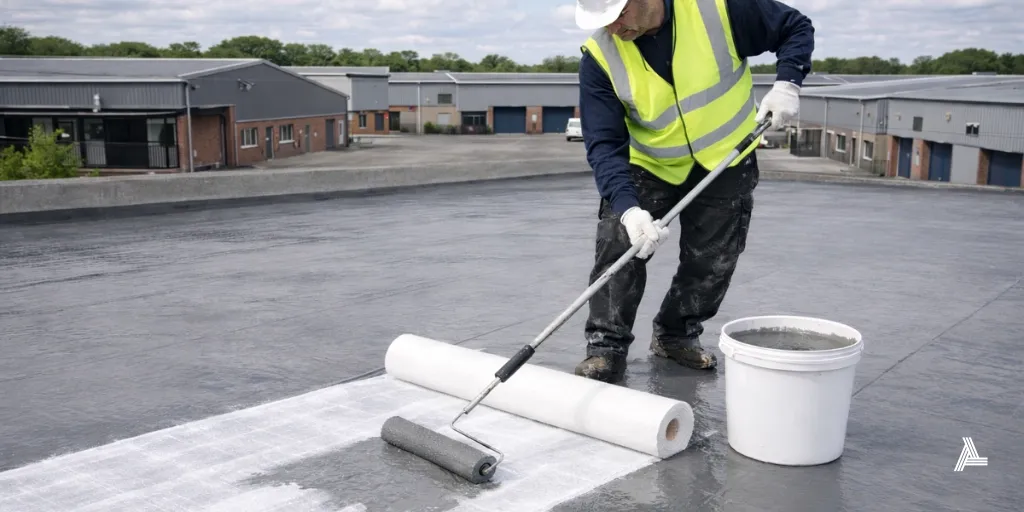
After priming, a base layer of the resin system is applied as the first layer of waterproofing. While still wet, a layer of reinforcement fleece is embedded into the base coat to add strength and resilience to the membrane. The fleece reinforces the waterproofing system, helping it to withstand movement and wear over time. Once the fleece is embedded, an additional layer of the base coat is applied to fully saturate the fleece, ensuring it is completely integrated into the membrane.
Top Coat Application
After the base coat and reinforcement fleece have cured, a top layer of PMMA resin is applied. This top layer provides additional waterproofing protection, UV resistance, and gives the membrane a smooth, finished appearance. The top coat also helps protect the underlying layers from environmental factors, extending the system’s lifespan.
Typical Curing Times
PMMA systems are known for their quick curing times, often setting within an hour depending on the weather conditions. However, the curing time can vary based on temperature and humidity, so it’s essential to follow the manufacturer’s guidelines to achieve optimal results. Quick curing is especially advantageous for projects in the UK where weather conditions can change rapidly.
Is PMMA the Right System for your Roof?
For commercial property owners in the UK, PMMA roofing systems offer a high-performance, long-lasting waterproofing solution, especially in scenarios where time constraints, complex roof shapes, or severe weather conditions are considerations. While the upfront costs and installation complexities might seem like drawbacks, the advantages in terms of durability, low maintenance, and flexibility make PMMA a worthwhile investment for many businesses.
PMMA roofing systems bring unique benefits, including fast application, durability, and adaptability to complex designs, which align with the demands of the UK commercial roofing sector. However, the higher costs, need for skilled installers, and environmental considerations are important factors to weigh. For those considering PMMA, working with an experienced contractor can ensure a high-quality installation that maximises the system’s longevity and performance.