In the commercial roofing industry, liquid-applied roofing systems are a popular choice for restoring or protecting roof surfaces due to their waterproofing capabilities, durability, and long-lasting results. When choosing between these systems, however, it’s essential to understand the terms “solvent-free” and “solvent-less.” While they may sound similar, they differ in formulation, application, environmental impact, and performance. Here’s a deeper look into what sets these two types of roofing systems apart.
What are “Solvent-Free” Roofing Systems?
A solvent-free roofing system does not contain solvents in its formulation. Solvents are commonly used in traditional coatings to help the material spread more easily, but they can release volatile organic compounds (VOCs) during application. VOCs contribute to air pollution and may pose health risks to installers and occupants in the surrounding environment. Solvent-free coatings, by contrast, are designed to be more environmentally friendly by eliminating these solvents.
Solvent-free systems produce lower VOC emissions, making them ideal for buildings that prioritise air quality, such as hospitals, schools, and office spaces. Solvent-free formulations are often thicker, allowing for robust and durable application with fewer layers, reducing labour costs and minimising disruptions. Additionally, since they lack chemical solvents, solvent-free systems are odourless, which makes them a suitable option for projects in occupied buildings where strong smells may be disruptive.
What are “Solvent-Less” Roofing Systems?
A solvent-less roofing system, while not completely solvent-free, contains only minimal amounts of solvents, typically below a certain threshold. These systems are often chosen as a middle ground between fully solvent-free and solvent-based options, balancing performance and environmental considerations.
Solvent-less roofing systems offer reduced VOC emissions compared to traditional solvent-based systems, making them a more environmentally friendly option, though they still emit small amounts of VOCs. Their thinner formulation allows for easier application, especially on roofs with intricate details, where a more spreadable coating may be necessary. Solvent-less systems also have faster curing times, which can be advantageous for projects that require a swift turnaround. In terms of cost, solvent-less systems tend to be more affordable than solvent-free because they require thinner coats. However, for areas exposed to high UV or adverse weather, multiple layers may be necessary to ensure durability.
Application and Performance
Choosing between solvent-free and solvent-less liquid-applied roofing systems should take into account project-specific needs, including performance expectations, budget, and the building’s requirements.
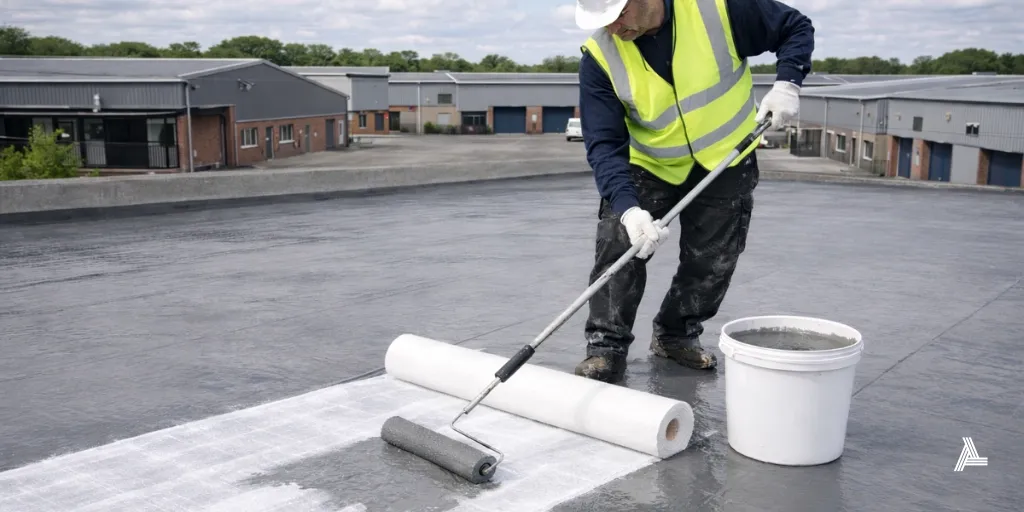
The application process can vary significantly: solvent-free coatings, due to their thicker nature, may require specialised techniques to achieve an even layer. Solvent-less systems, being more spreadable, can work well on roofs with complex layouts and those that need to break down a fibreglass or polyester reinforcement for added strength. In terms of performance, solvent-free systems generally excel in areas with extreme temperatures or high UV exposure, whereas solvent-less systems may suit projects where frequent maintenance or recoating is necessary due to their cost-effectiveness and ease of application. The cost difference is also worth considering, as solvent-free systems, while more durable, have higher initial material costs. Solvent-less systems are more economical initially, although the need for additional layers in high-exposure areas can increase expenses over time.
Which System to Choose?
The decision between solvent-free and solvent-less liquid-applied roofing systems depends on the specific needs and priorities of the project. Solvent-free options are ideal for projects that value environmental responsibility, durability, and VOC compliance, making them suitable for high-traffic and high-sensitivity buildings. Conversely, solvent-less systems offer a practical balance between performance and cost, with quicker application and curing times, suitable for projects that are time-sensitive or budget-conscious.
The Overcoat liquid applied roofing system comes in both Solvent-less and Solvent-free versions ensuring you can choose the best option to suit the requirements of your project.