Flat Roof Overlay Guidance: Best Practice for Contractors and Specifiers
Overlaying an existing flat roof can be a practical and sustainable way to extend its service life. When planned and executed correctly, it reduces waste, cost and disruption while improving performance and compliance. However, success depends on a thorough survey of the existing roof, careful preparation, and adherence to UK Building Regulations covering structure, fire safety, and energy efficiency.
A flat roof overlay is not a shortcut but is a technical process that must be supported by detailed assessment, appropriate system choice, and competent installation. Where the existing deck and insulation are sound, an overlay is often the starting point for roof renewal and overlay systems that extend service life without a full tear-off.
When an Overlay is Suitable
Overlaying is generally suitable where the existing structure and waterproofing are in good condition, dry, and free from significant damage. Typical scenarios include roofs where the membrane has reached the end of its service life but the underlying deck and insulation remain stable and well-bonded. In these situations, applying a new waterproofing layer can provide renewed protection and extend service life without the cost and disruption of a full replacement.
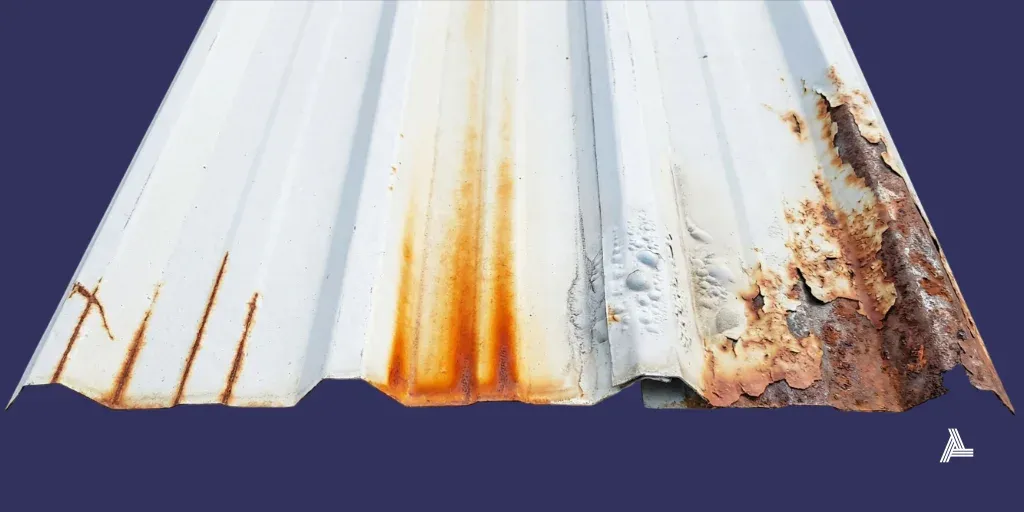
There are, however, circumstances where a complete strip and replacement is the only appropriate option. Roofs affected by trapped moisture, interstitial condensation, rot, corrosion, or structural weakness should not be overlaid. Concealing these problems will only lead to progressive failure and additional cost later on. A detailed condition survey, supported by diagnostic testing such as core sampling, moisture mapping or thermographic imaging, is therefore essential before making any decision. These investigations should be documented thoroughly to confirm the suitability of the existing structure for an overlay.
Pre-Installation Assessments
A professional condition report should form the basis of every overlay specification. This report should confirm the integrity of the roof deck, identify any areas of trapped moisture, and assess the adhesion and stability of existing materials. The additional load imposed by the new system must be considered carefully, particularly on older buildings or lightweight structures. In some cases, a structural engineer may need to verify that the deck and supporting frame can accommodate the new system safely.
Equally important is the compatibility between the existing surface and the proposed overlay materials. Different waterproofing technologies behave differently when bonded to substrates such as bitumen felt, asphalt, concrete, or single-ply membranes. Incompatible combinations can result in chemical reaction or adhesion failure, so both manufacturer data and site testing should guide the specification.
Surface Preparation and Application
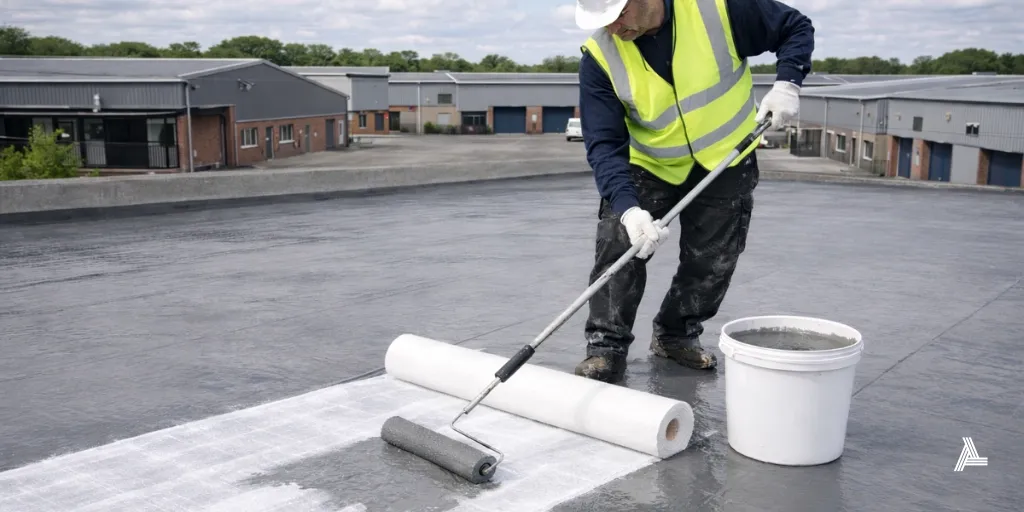
Successful overlaying begins with comprehensive preparation. The existing surface should be cleaned of dust, moss, grease and loose debris, then repaired to eliminate splits, blisters or irregularities that could affect adhesion. Areas of defective membrane should be cut out, patched and levelled to create a smooth, stable base.
Detailing around upstands, edge trims, rainwater outlets and penetrations requires particular care, as these junctions are the most common points of water ingress. The new system must integrate correctly with existing features and provide continuous watertight protection.
Where primers are required, they should be applied under stable temperature and humidity conditions to prevent outgassing or pinholing in the finished membrane. The Application should follow the manufacturer’s guidance on film thickness, curing time, and overlap details to ensure uniform coverage and long-term durability.
Insulation and Thermal Upgrades
An overlay project presents an ideal opportunity to upgrade thermal performance in line with the reasonable improvement standards under Part L of the Building Regulations for refurbished thermal elements. Adding or replacing insulation can significantly reduce heat loss and improve energy efficiency, while helping to minimise the risk of condensation forming within the roof build-up.
Tapered insulation systems are often used to improve both drainage and thermal performance. These allow the roof to achieve a minimum finished fall of 1:80, which is the recognised standard for effective water runoff. Adequate falls are critical in preventing ponding water, which can accelerate membrane deterioration and compromise performance over time. Any insulation upgrade should also maintain appropriate vapour control and continuity of air sealing at all junctions.
Fire, Wind and Structural Performance
The completed system must meet the necessary standards for fire performance, wind uplift resistance and structural integrity. All overlay materials should achieve a fire rating suitable for external exposure, typically Broof(t4) under BS EN 13501-5, to demonstrate compliance with Building Regulations for exposed roof assemblies.
Wind uplift design is equally important. The fixing method, membrane type, and substrate strength must all be considered to ensure that the system can withstand negative pressures, particularly around corners, perimeters and parapets where forces are greatest. Design calculations and installation should always align with relevant British Standards and manufacturer recommendations.
Material Selection and Quality Assurance
To ensure compliance and long-term reliability, all overlay systems should be independently tested and certified under recognised quality schemes such as BBA or UKCA. Products manufactured within an accredited quality management framework, such as ISO 9001, offer greater consistency and assurance of performance.
Equally, success depends on the installer’s skill. Overlaying requires technical understanding of both the existing substrate and the new system being applied. Using trained, approved contractors ensures correct preparation, detailing, and curing, all of which are essential for achieving a watertight and durable finish. When properly executed, an overlay not only extends the roof’s life but also reduces waste, cost and environmental impact by avoiding unnecessary strip-outs and landfill disposal.
Conclusion
Flat roof overlays can provide excellent results when they are correctly assessed, specified and installed. They offer a practical route to renew waterproofing integrity, improve thermal efficiency and minimise environmental impact, while maintaining compliance with the UK’s Building Regulations.
Before proceeding, contractors, specifiers and property owners should ensure that surveys, testing and documentation are completed in full, compatibility is confirmed, and only certified systems are used. With the right design approach, quality materials and competent workmanship, a flat roof overlay can transform an ageing roof into a high-performance, energy-efficient and long-lasting structure that continues to protect the building for many years to come.
For more information or to find the right solution for your next flat roof overlay project, talk to our experienced technical team at Allbase.