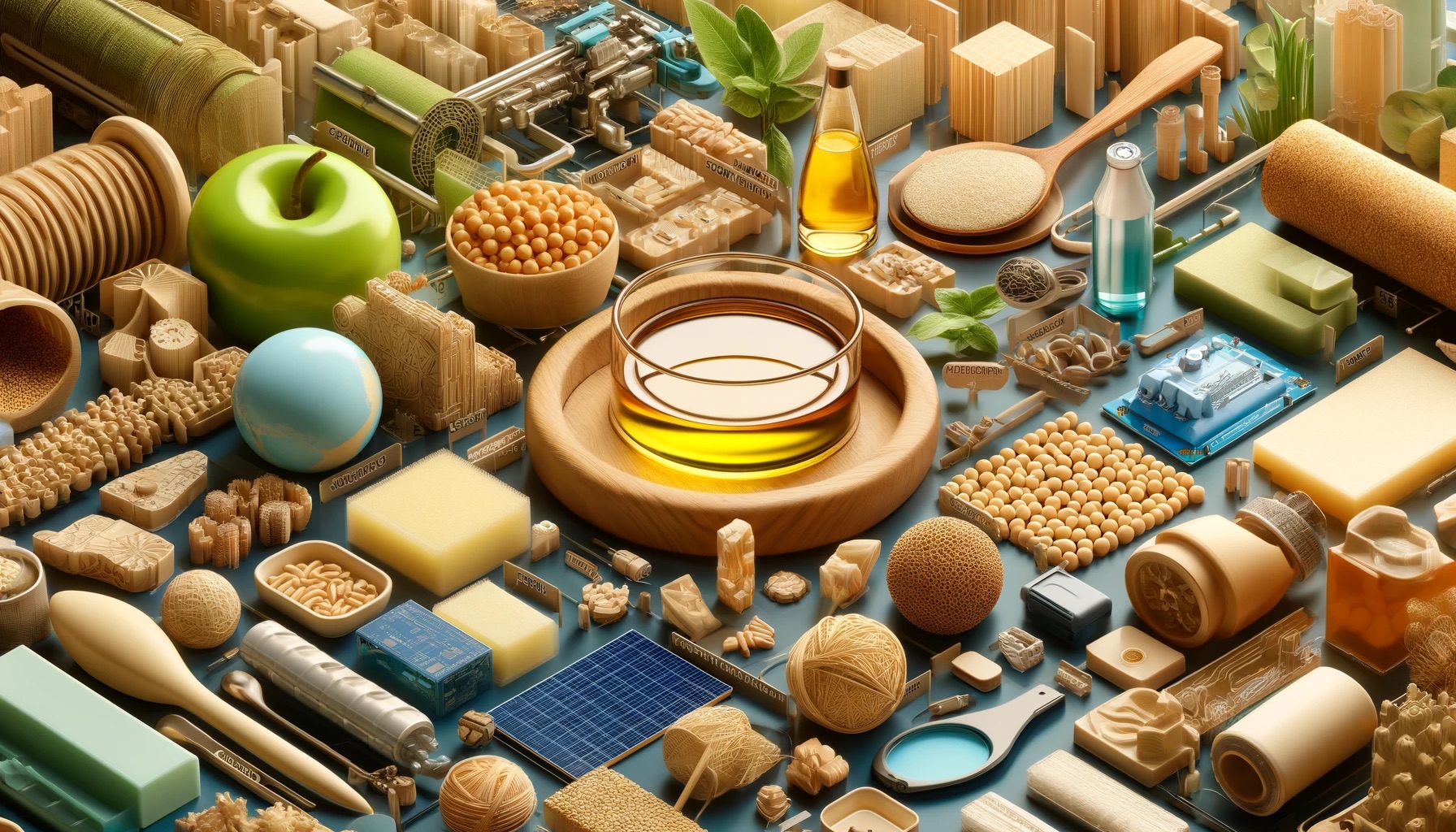
The push towards sustainability has significantly impacted various industries, leading to the development of bio-based materials that are both environmentally friendly and effective. One such advancement is in the realm of epoxy resins. Bio-based epoxy resins, derived from renewable resources, are gaining traction as they offer similar or enhanced properties compared to their petroleum-based counterparts. This article explores the different types of bio-based epoxy resins and their applications in composites.
Bio-based epoxy resins are derived from natural resources such as vegetable oils, lignin, rosin, and other plant-based materials. These resins offer a sustainable alternative to conventional petroleum-based epoxies, reducing the environmental footprint and dependence on fossil fuels.
Epoxy resins made from vegetable oils
One of the most common types of bio-based epoxy resins is vegetable oil-based epoxy resins. Vegetable oils, such as soybean, linseed, and castor oil, are used as a base material for these resins. They contain triglycerides, which can be chemically modified to produce epoxidised triglycerides. These resins are typically used in coatings, adhesives, and as matrix materials in natural fibre composites due to their good mechanical properties and environmental benefits. Pairing one of these resins with natural fibre reinforcements gives you a composite that is lower-impact on both the matrix and the fibre side.
Lignin-Based Epoxy Resins
Lignin-based epoxy resins are another promising type of bio-based epoxy resin. Lignin, a major by-product of the paper and pulp industry, is used to produce these resins. Its complex aromatic structure makes it suitable for high-performance applications. Lignin-based epoxies are used in high-strength applications, such as automotive and aerospace composites, due to their excellent thermal stability and mechanical properties.
Rosin-Based Epoxy Resins
Rosin is a natural resin obtained from pine trees and can be chemically modified to produce bio-based epoxy resins that offer good adhesion and chemical resistance and are useful in coatings, adhesives, and electronic materials.
Sugars and Carbohydrate-Based Epoxies
Sugars and carbohydrates, such as sorbitol and isosorbide, can be used to create epoxy resins. They provide a renewable source for production and are abundant. Epoxies derived from sugars are used in coatings, adhesives, and composite materials, offering a balance of mechanical properties and biodegradability.
Epoxidised Natural Rubber (ENR)
Natural rubber can be epoxidised to produce a flexible and tough bio-based epoxy resin. This modification improves the compatibility of natural rubber with other materials, enhancing its performance in composites. ENR is used in applications requiring flexibility and impact resistance, such as in automotive components and flexible electronics.
Bio-based epoxy resins offer several advantages. They reduce reliance on non-renewable resources and lower greenhouse gas emissions. These resins are derived from abundant natural resources, ensuring a sustainable supply. Some bio-based epoxies even provide enhanced biodegradability compared to traditional epoxies, reducing environmental impact at the end of their life cycle.
Despite their advantages though, bio-based epoxy’s are considerably more expensive than traditional resins due to higher production costs and some of these resins may require modifying traditional processing techniques to match the performance of traditional resins.
As research and development continue, these resins are expected to play an increasingly important role in various industries, offering a viable and environmentally friendly alternative to conventional epoxy resins. The continued innovation in bio-based resin technology promises to enhance performance, reduce costs, and expand the range of applications, contributing to a greener and more sustainable future.