Polyurethane (PU) roofing systems have become an excellent choice in the UK’s commercial and industrial roofing sector. These advanced systems offer a versatile, durable, and effective solution for protecting and waterproofing various roof types. This blog post will go into understanding what PU roofing entails, how it’s applied, and the systems advantages and limitations.
What are Polyurethane Roofing Systems?
Polyurethane resins were first introduced into roofing systems in the mid-20th century, gaining popularity in the 1960s and 1970s as part of advancements in liquid-applied membrane technologies. Originally developed for industrial and commercial applications, these resins offered a durable, flexible, and waterproof solution ideal for flat and low-slope roofs. Polyurethane’s ability to bond seamlessly to various substrates and provide long-lasting protection against UV rays, chemicals, and extreme weather conditions made it an ideal choice for roof refurbishment and new installations. Over the years, innovations in formulation have led to the development of solvent-free and solventless polyurethane systems, improving environmental sustainability while maintaining high performance.
Polyurethane systems are highly adaptable, making them suitable for roofs of various shapes and sizes, including those with complex detailing, penetrations, or irregular layouts. Their seamless nature eliminates common weak points such as joints or seams found in traditional roofing systems.
These systems are widely used for refurbishing existing roofs or as part of a new build. Its ability to adhere to various substrates, including concrete, metal, and bitumen, makes it a versatile choice for commercial and industrial buildings.
General Application Guide
Surface Preparation
The roof substrate must be cleaned and prepared to ensure proper adhesion. This may involve removing debris, repairing defects, and, if required, applying a primer to promote bonding.
Basecoat Application
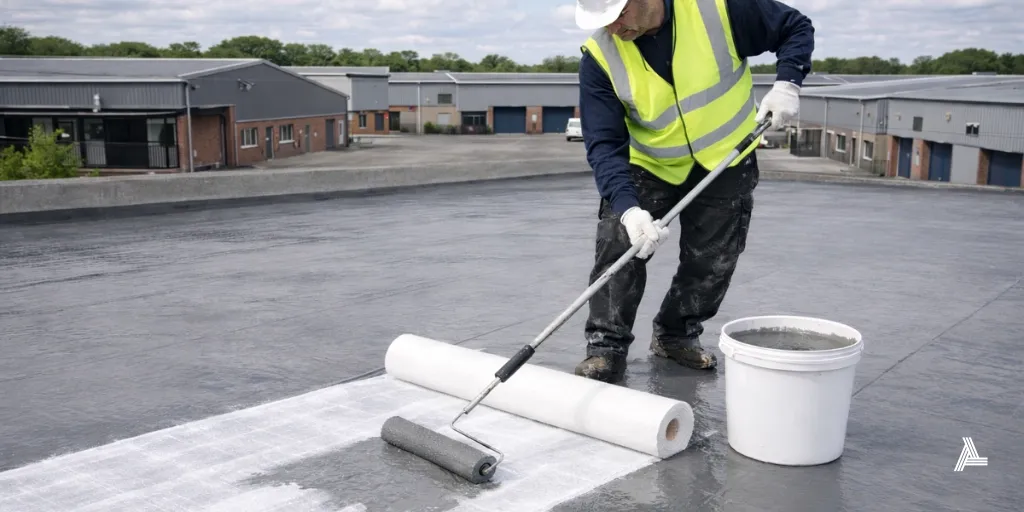
A liquid polyurethane base coat is applied directly to the prepared surface using a roller, brush, or spray. This initial layer creates a solid, waterproof foundation.
Reinforcement (If required)
In high-stress areas or over the entire roof, a fibreglass reinforcement like Fibremat or fleece may be embedded into the wet base coat. This step enhances the membrane’s tensile strength and puncture resistance.
Topcoat Application
Once the base coat cures, a UV-resistant top coat is applied. This final layer protects the system from sunlight, weathering, and other environmental factors while providing a smooth, durable finish.
Advantages of PU Roofing Systems
Polyurethane roofing systems are renowned for their ability to deliver a seamless and highly effective waterproofing solution. The liquid system creates a continuous membrane without any seams or joints, significantly reducing the likelihood of water ingress. This seamless application is particularly advantageous for roofs with intricate detailing or a large number of penetrations, where traditional roofing materials would often struggle.
PU Roofing systems are incredibly versatile and can be applied to a number of different substrates, including concrete, metal, and bitumen, making them suitable for use on flat, pitched, or even unusually shaped roofs and gutters. While not as strong as a polyester-based fibreglass roofing system the use of a reinforcement means they are highly durable, offering excellent resistance to the UK weather.
PU roofing membranes area incredibly flexible and can expand and contract with temperature fluctuations without cracking or losing adhesion. This ability to accommodate structural movement makes them particularly suitable for buildings that experience dynamic loads or thermal expansion, such as large commercial or industrial facilities. For projects where the roof has to absorb constant structural movement, a purpose-built flexible PU system such as eFlex takes the elongation these coatings are known for and engineers it into a complete roof. The inherent elasticity of polyurethane also allows it to bridge minor cracks and imperfections in the roof substrate, enhancing the system’s ability to create a robust, uniform, and long-lasting protective layer.
Limitations of PU
One of the most significant drawbacks of PU is the reliance on favourable weather conditions during installation. Since the application process involves liquid components, it requires a dry and relatively warm environment for optimal curing and adhesion. With the UK weather, these requirements can limit the installation window but with careful planning and preparation, this is a relatively minor obstacle to overcome.
Another factor to consider is the expertise required for the successful application of polyurethane systems. Achieving a consistent and high-performing finish depends heavily on the skill of the installer, as improper application can lead to defects that compromise the membrane’s waterproofing integrity and durability. This reliance on trained professionals underscores the importance of choosing an experienced contractor to ensure the system performs as intended over its lifespan.
Finally, the initial cost of a polyurethane roofing system may be higher compared to some alternative materials or more traditional roofing methods. Although the ease of installation and maintenance often offset this expense, the upfront investment can be a deterrent for projects operating with a tight budget.
Conclusions
Polyurethane roofing systems are a reliable choice for UK commercial and industrial roofs, offering seamless waterproofing, durability, and versatility. While they may require skilled installation and favourable weather conditions for optimal application, their long-term benefits often outweigh the initial investment.
Polyurethane roofing systems like Fibrecoat offer a robust and versatile solution for domestic, commercial and industrial roofs in the UK. Their seamless, durable, and adaptable nature makes them an excellent choice for a variety of applications. When properly installed, PU systems provide long-term waterproofing and protection, making them a valuable investment for many businesses. By weighing the advantages and potential limitations, roofing professionals and property owners can determine whether a polyurethane roofing system is the right fit for their needs.