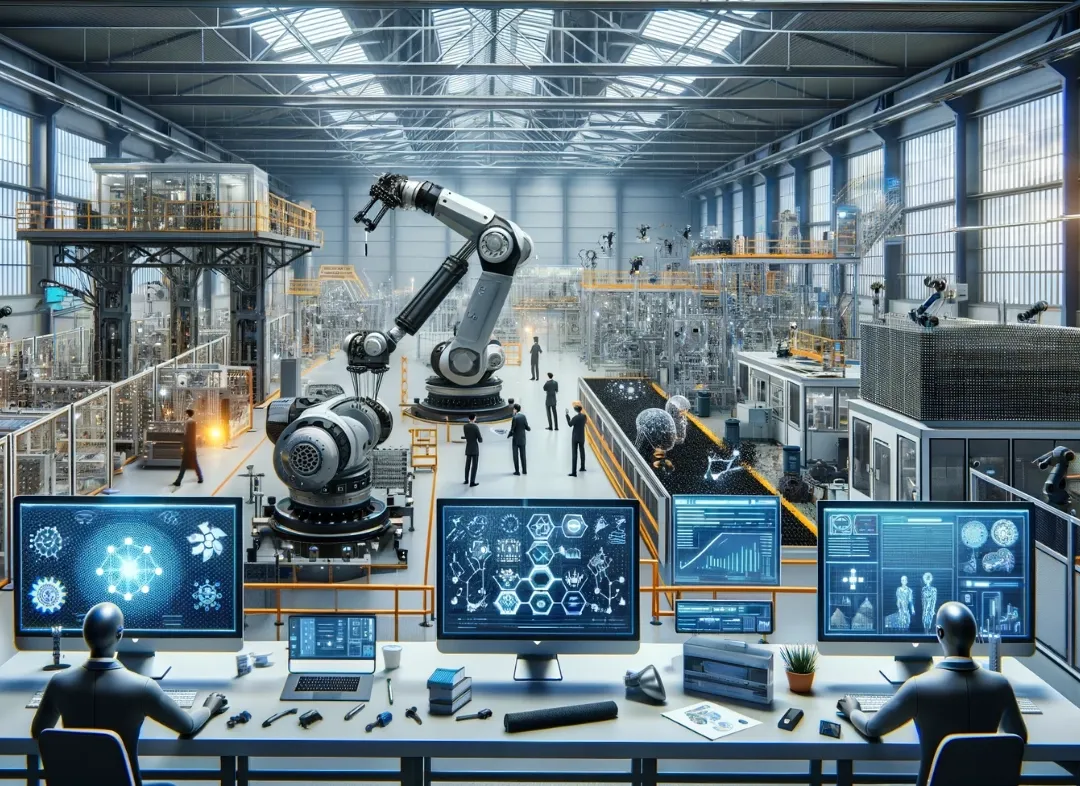
The advanced composites industry, a critical sector in aerospace, automotive, and construction, has seen significant transformations with the integration of artificial intelligence (AI). AI’s ability to analyse vast amounts of data, optimise manufacturing processes, and enhance material properties is revolutionising how composite materials are developed and utilised. This article explores how AI is affecting the advanced composites industry, highlighting real-world examples of its impact.
Enhancing material design
One of the biggest impacts of AI in the composites industry is in the design and development of new materials. AI algorithms can predict the properties of composite materials based on their composition and structure, enabling researchers to create materials with specific characteristics faster and more efficiently than traditional methods.
Boeing has incorporated AI to develop lighter and stronger composite materials for its aircraft. By using machine learning algorithms, Boeing can simulate the behaviour of composite materials under various conditions, reducing the time and cost associated with experimental testing. This has led to the creation of more efficient materials that enhance the performance and fuel efficiency of their aircraft.
Optimisation of Manufacturing Processes
AI is also transforming manufacturing processes in the composites industry. Traditional methods of manufacturing composites often involve trial and error, which can be time-consuming and costly. AI can optimise these processes by identifying the most efficient production methods and predicting potential issues before they occur.
Aerospace company Airbus has implemented AI in its manufacturing plants to optimise the production of composite components. AI-powered systems monitor and control the curing process of composite materials, ensuring that they achieve the desired strength and durability. This has resulted in higher-quality components and reduced waste, contributing to more sustainable manufacturing practices.
Quality Control and Defect Detection
Quality control is critical in the composites industry, where defects can significantly impact the performance and safety of the final product. AI technologies, such as machine learning and computer vision, are being used to enhance quality control measures by detecting defects that are often missed by human inspectors.
General Electric has adopted AI-driven inspection systems for its composite manufacturing lines. These systems use advanced imaging techniques and AI algorithms to identify defects in real time, ensuring that only the highest quality materials are used in their products. This has improved the reliability and safety of their composite components, particularly in the aerospace and energy sectors.
Predictive Maintenance and Lifecycle Management
AI also plays a crucial role in the predictive maintenance and lifecycle management of composite structures. By analysing data from sensors embedded in composite materials, AI can predict when maintenance is needed, preventing failures and extending the lifespan of these materials.
Rolls-Royce uses AI to monitor the health of composite components in its aircraft engines. The AI systems analyse data from sensors to detect signs of wear and tear, allowing for timely maintenance and reducing the risk of unexpected failures. This proactive approach not only enhances safety but also reduces maintenance costs and downtime.
Customisation and Personalisation
The ability of AI to process and analyse large datasets also allows for greater customisation and personalisation in the composites industry. Manufacturers can tailor composite materials to meet specific requirements of individual clients or applications, leading to more efficient and effective solutions.
Hexcel uses AI to customise composite materials for their clients. By analysing the specific needs and conditions of each application, Hexcel can adjust the composition and manufacturing processes to create bespoke materials that offer optimal performance. This has opened up new possibilities for innovation in various industries, from aerospace to sporting goods.